BLOGPhysical Medicine

Spinal Decompression: Who It Helps, What a Session Feels Like, and How Many Visits
Quick answer

Non-surgical spinal decompression is controlled traction on a padded table. A slow, steady pull unloads the low back to ease pressure on discs and nearby nerves. It is most often used for disc-related low back pain and sciatica. It is not surgery and not a high-force adjustment. How many visits you need depends on what your exam finds.

People often search for disc decompression when back pain will not let up. Here is what it is, who it helps, and what to expect.

What spinal decompression is

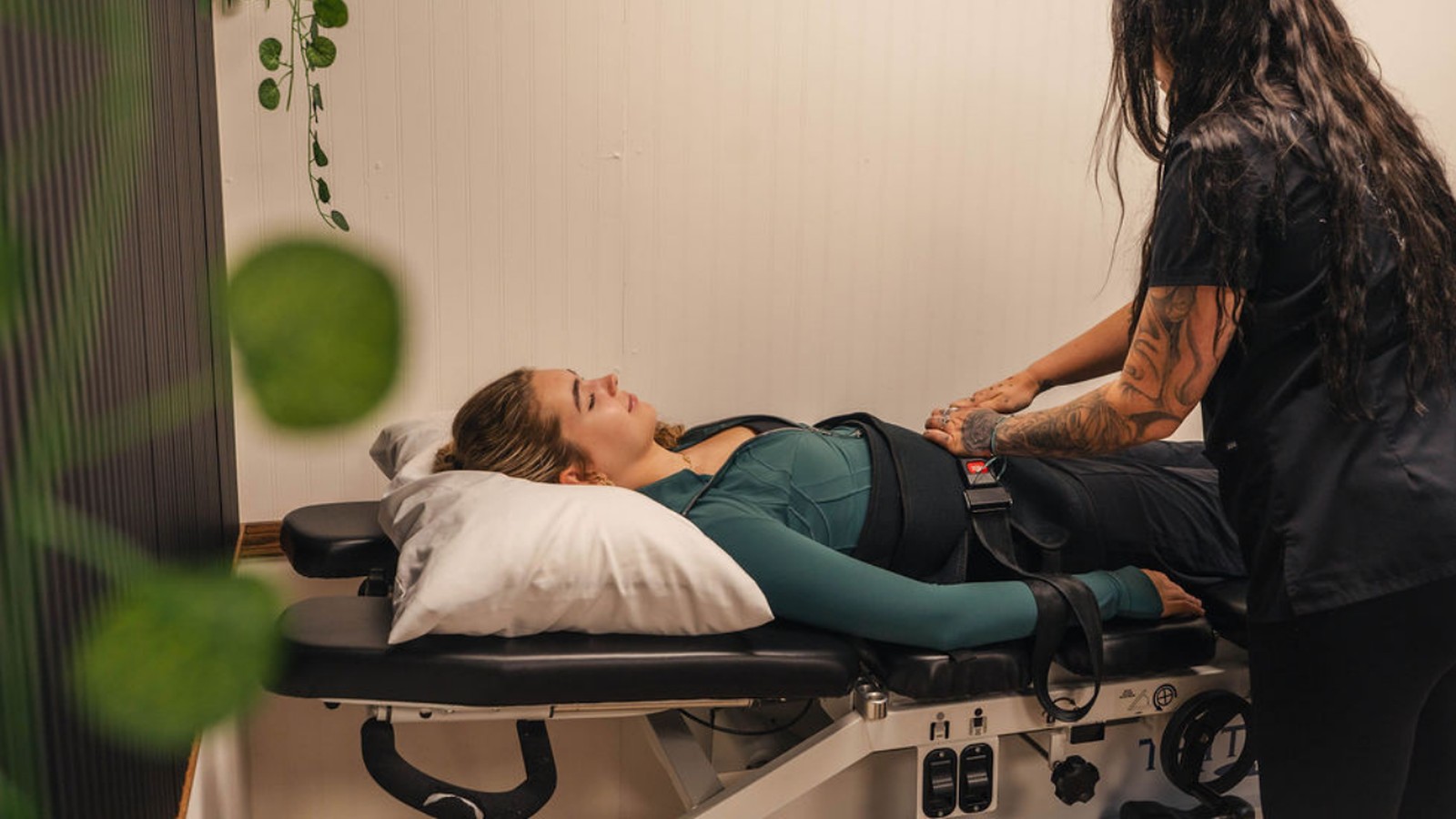
Spinal decompression is a type of traction. You lie on a padded table, and straps are fitted around your waist and hips. The table then slowly and gently pulls to unload the low back.

The goal is to ease pressure on a disc and the nerve near it. Sitting, bending, and lifting all load your discs, and an irritated disc can feed pain in your back or down your leg.

  • Not surgery. Nothing is cut or injected.
  • Not a high-force adjustment. The pull is slow and steady, with no quick thrust.

Who spinal decompression helps

Decompression tends to fit pain that tracks with pressure on a disc or nerve, such as:

  • Disc-related low back pain. Ache that builds with bending or sitting. See our low back pain page.
  • Sitting and lifting strain. Long days at a desk or behind the wheel, or work that keeps you lifting.
  • Sciatica. Pain, tingling, or numbness that travels down the leg. See our sciatica page.
  • Pain that has not settled. Stiffness and ache that stretching alone has not changed.

It is not right for everyone. Some back pain responds better to an adjustment, soft tissue work, or rehab. Tell us if you are pregnant, have had back surgery, or have osteoporosis. The exam decides.

What a session feels like

Step 1

Exam first

  1. Your provider asks about your pain and checks how you move.
  2. The exam decides if traction is the right tool that day.
Step 2

Get set up

  1. You lie on your back with a pillow under your head.
  2. Padded straps are snugged around your waist and hips.
Step 3

The gentle pull

  1. Most people feel a gentle stretch in the low back, not pain.
  2. Tell us if anything feels sharp, and we ease or stop it.
Step 4

Keep the change

  1. Chiropractic, dry needling, or active rehabilitation may be added in the same visit.

Many people find it relaxing. Some feel a little sore the next day. New-patient physical medicine visits are about 90 minutes. Follow-ups are about 30 to 45 minutes. Not every visit includes decompression.

How many visits you may need

There is no set number that fits everyone. The plan depends on your exam, how long you have had symptoms, and how you respond.

  • Some people notice change over a short course of visits.
  • Others, especially with long-standing pain or leg symptoms, need a longer plan.
  • Your provider sets expectations after the exam and checks progress along the way.

What you do between visits matters too. If your back is unloaded here and loaded the same way at your desk the next morning, progress stalls. So care often adds active rehabilitation and small changes to how you sit and lift. Our post on low back pain after a desk day has ideas.

One patient shared in a Google review that she was 5 visits in and had nearly no back discomfort. That is one person's experience. Results vary.

When to get checked right away

Get urgent care right away if back pain comes with:
  • New trouble controlling your bladder or bowels
  • Fever, or pain after a serious fall or accident

If pain keeps coming back or travels down your leg, get an exam to find what is driving it.

How Kee Health helps with spinal decompression

At Kee Health, decompression is one part of a physical medicine visit. The exam guides each step:

No referral is needed. New patients are scheduled by our team, not online. Call (608) 207-8212 or use the form on our contact page. We are at 5939 State Road 113 in Waunakee, serving Madison and Dane County, open Monday 8am to 4pm and Tuesday through Thursday 8am to 6pm.

Contact us to get started→

Frequently asked questions

Is spinal decompression surgery?

No. It is controlled traction on a padded table. Nothing is cut or injected, and there is no high-force adjustment.

Does spinal decompression hurt?

Most people feel a gentle stretch, not pain. Some feel mild soreness the next day. Tell your provider if anything feels sharp, and the pull can be eased or stopped.

How many spinal decompression sessions will I need?

It depends on what your exam finds. Some people notice change over a short course of visits. Others need a longer plan. Your provider will set expectations after the exam.

Do I need a referral for spinal decompression?

No. New patients call (608) 207-8212 or use the form on our contact page to schedule. We are out of network and accept credit cards, HSA, and FSA.

This article is for general education and is not medical advice. Spinal decompression is not right for everyone, and results vary. Talk with a qualified health care provider about your symptoms, and get urgent care for the warning signs above.