BLOGPhysical Medicine

Snow Shoveling and Your Back: How to Avoid a Winter Injury
Quick answer

Snow shoveling back pain usually comes from bending at the waist, lifting heavy loads, and twisting. Warm up first, push snow instead of lifting it, and when you lift, bend your knees and turn with your feet. A mild strain often eases within a week or two. Chest pain, new numbness, or bladder or bowel changes need emergency care.

The first real snow in Waunakee always shows up before we are ready. Here is how to clear the driveway without hurting your back.

Why shoveling is hard on your back and heart

Madison averages about 52 inches of snow a season, and the first measurable snow usually lands in mid-November. That first shoveling day comes after months off. Wet snow is heavy, and most of us scoop too much and twist to toss it.

  • Your low back takes the hit. In a national study of emergency room visits for shoveling injuries, the lower back was the most commonly hurt area.
  • Your heart works hard too. The American Heart Association notes that cold air narrows blood vessels, and arm-heavy work like shoveling strains the heart.
  • Some people should not shovel. If you have heart disease or heart risk factors, ask your doctor first, or have someone else clear the snow.

4 steps before the first snow

Treat shoveling like a workout, because it is one.

Step 1

Warm up for 10 minutes

  1. March in place, then do arm circles and easy squats.
  2. Dress in layers. On bitter days, cover your mouth and nose.
  3. Skip shoveling right after a big meal.
Step 2

Choose the right shovel and boots

  1. Use a light shovel that fits your height.
  2. Space your hands apart for leverage.
  3. Wear boots with good tread, and salt where you walk.
Step 3

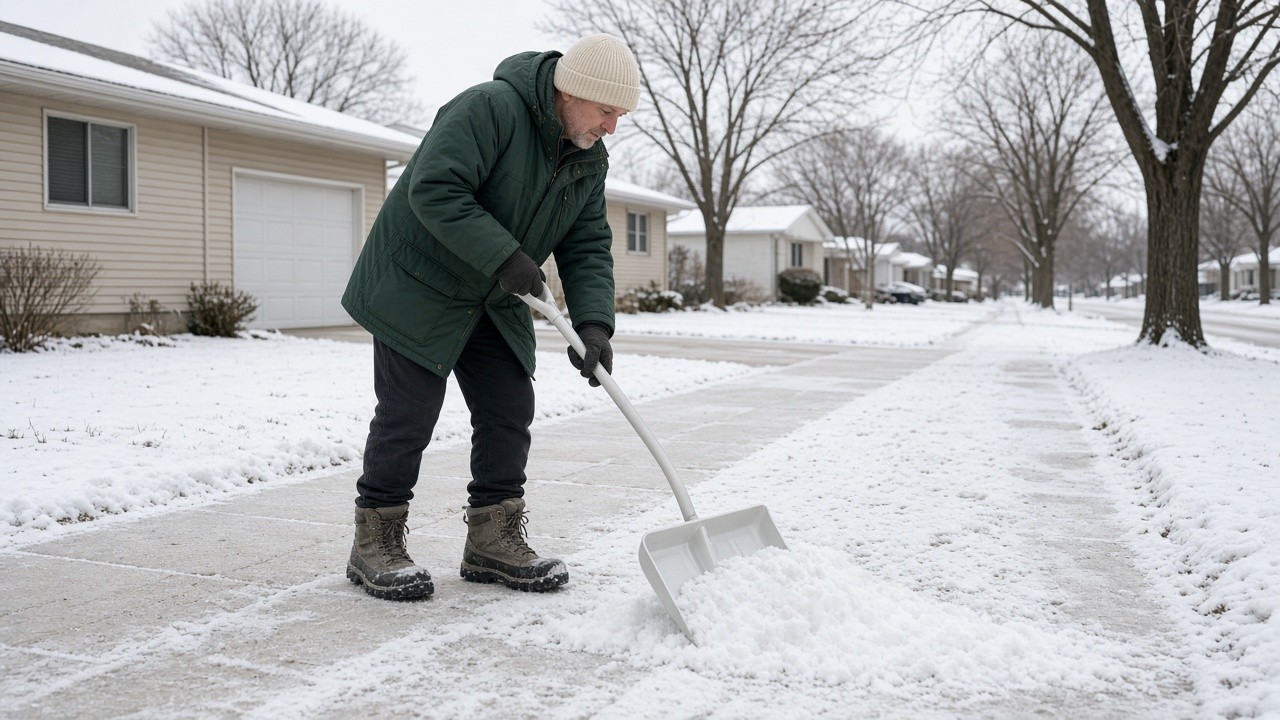
Push, do not lift

  1. Clear early and often, before snow packs down.
  2. Pushing is easier on your back and your heart.
  3. Take small scoops and short breaks.
Step 4

Lift with your legs, turn with your feet

  1. Squat with feet apart, knees bent, and back straight.
  2. Keep the load small and close to your body.
  3. Walk the snow where it goes. Never twist to throw it.

If your back is sore after shoveling

Most shoveling strains settle with simple care:

  • Keep moving gently. Short walks help more than bed rest.
  • Try cold or heat. Use whichever feels better, 15 to 20 minutes at a time.
  • Ask about pain relievers. Over-the-counter options may help. Follow the label.
  • Ease back in. Next storm, shovel in shorter rounds.

Desk days stiffen the same muscles. See low back pain after a desk day or our low back pain page.

When to get checked (right away)

Stop shoveling and call 911 or get emergency care for:
  • Chest pain, pressure, or squeezing, or pain in the arm, back, neck, or jaw (possible heart attack)
  • Shortness of breath, a cold sweat, nausea, lightheadedness, or a racing or uneven heartbeat
  • New trouble controlling your bladder or bowels, or numbness in the groin or inner thighs
  • Leg weakness or numbness that is getting worse
  • Back pain after a fall on ice, or back pain with a fever

Do not wait out heart symptoms. Book a visit if back pain is not better after a week of home care or spreads down your leg. Our sciatica page covers pain that travels.

How Kee Health helps with shoveling back pain

Back pain care at Kee Health happens in a physical medicine visit with our team, including Dr. Bronwyn Hutchinson, DC. The exam guides each step:

No referral is needed. New patients are scheduled by our team, not online. Call (608) 207-8212 or use the form on our contact page. We are out of network and accept credit cards, HSA, and FSA. We are at 5939 State Road 113 in Waunakee, serving Madison and Dane County. Hours: Monday 8am to 4pm, Tuesday through Thursday 8am to 6pm. Closed Fridays.

Contact us to get started→

Frequently asked questions

Can shoveling snow cause lower back pain?

Yes. Bending, lifting heavy snow, and twisting can strain the muscles and joints of the low back. It is the most common shoveling injury area.

How long does back pain from shoveling snow last?

A simple strain often eases within a week or two. Call a provider if it is not better after a week or spreads down your leg.

Should I use ice or heat after shoveling snow?

Either can help. Many people use cold for the first day or two, then heat for tight muscles, 15 to 20 minutes at a time.

Can a chiropractor help back pain from shoveling snow?

It may help a strain without red flags. At Kee Health, the exam comes first, and care may include chiropractic, soft tissue work, and rehab.

This article is for general education and is not medical advice. Results vary. Talk with a qualified provider about your symptoms. In an emergency, call 911.