Dry Needling: What It Is, Does It Hurt, and What to Expect
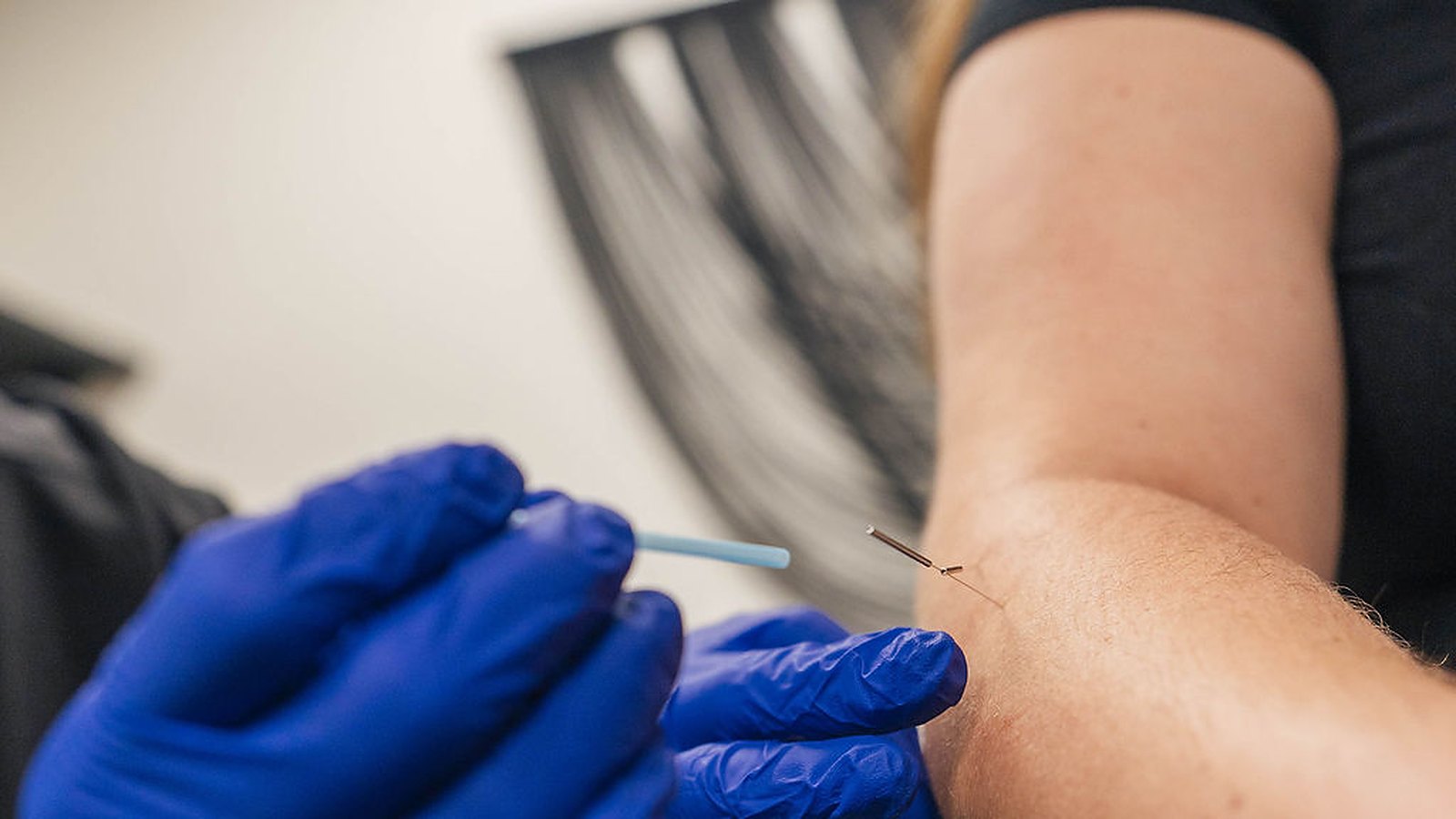
Dry needling uses a very thin, solid needle to reach a tight, tender spot in a muscle called a trigger point. Nothing is injected. Most people feel a quick prick and a brief twitch or ache. Mild soreness for a day or two is common. At Kee Health in Waunakee, near Madison, it is one part of an exam-first visit.
If the word "needle" makes you tense up, you are not alone. Most people ask us one thing first: will it hurt? Here are plain answers.
What dry needling is
Dry needling targets trigger points, the knotted, tender bands in a muscle. They can ache or send pain elsewhere, like a tight shoulder that feeds a headache.
Your provider places a thin, sterile, single-use needle into that band. It is called "dry" because nothing is injected. The goal is to help the muscle let go so you hurt less and move better. Research suggests it may ease muscle pain in the short term, especially paired with exercise. Results vary.
- Not acupuncture. The needles look alike, but dry needling is guided by a muscle and movement exam.
- Not a shot. Trigger point injections deliver medicine. Dry needling does not.
Does dry needling hurt?
It can be uncomfortable for a moment, but many people find it easier than expected. The needle is far thinner than one used for a shot. You may feel:
- Going in. A quick pinch. Some people barely feel it.
- The twitch. The muscle may jump for a split second. It feels odd and often means the muscle is responding.
- A deep ache. A dull ache or cramp for a few seconds.
- You are in control. Tell us if it is too much, and we adjust or stop.
Who dry needling may help
It tends to fit muscle pain that keeps coming back, such as:
- Neck and upper back tightness. Desk and screen strain. See our neck pain page.
- Tension-type headaches. Linked to tight neck and shoulder muscles. See headaches and migraines.
- Low back and hip knots. Tight bands that keep returning. See our low back pain page.
- Shoulder and elbow pain. From training or repetitive work. See shoulder pain and tennis elbow.
It is not right for everyone. Tell us if you are pregnant, take a blood thinner, have a weakened immune system, or had recent surgery. If needles scare you, say so. The exam decides.
Your first visit, step by step
Exam first
- We ask about your pain, health, and medications.
- We check how you move.
Talk it through
- Your provider explains what you may feel.
- No needle goes in until you say yes.
The needling
- The skin is cleaned, and a thin needle is tapped in through a guide tube.
- It may stay in for seconds or up to about 20 minutes. A first visit may use just one or two.
Keep the change
- Chiropractic, myofascial release, or active rehabilitation may be added in the same visit.
Wear loose clothes. New-patient physical medicine visits are about 90 minutes. Follow-ups are about 30 to 45 minutes. Not every visit includes needling.